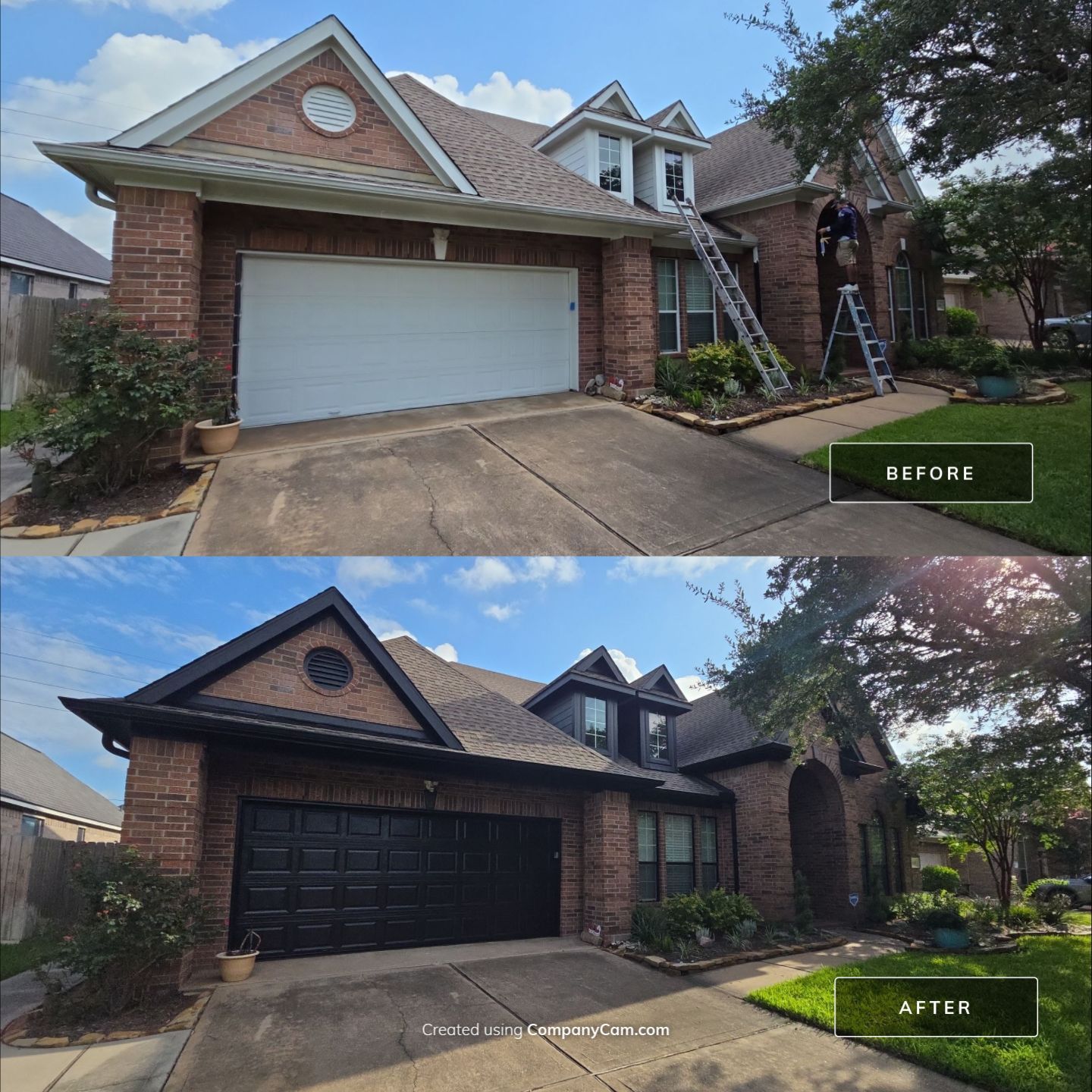
Sun Fading Exterior Paint in Cypress TX: Fade-Resistant Colors
Why South and West Walls Fade First
South- and west-facing exterior walls fade faster because they take direct sun for more hours of the day, and that UV exposure breaks down the chemical bonds holding paint pigment and resin together. In Cypress, TX, where the UV index regularly climbs past 10 during the May-through-September stretch, that breakdown shows up as chalking, dulling, and visible color shift years before the rest of the house looks tired. The fix is choosing the right pigment type, resin, and sheen for those elevations specifically — not just repainting with whatever color looks good on a swatch.
I've spent more than 20 years in this trade, most of it outside Houston, including a long stretch in New York, so I've seen how differently paint fails in different climates. Houston's combination of high UV and near-constant humidity is its own animal, and it hits sun-facing walls the hardest.
The Mechanics: UV, Heat, and Houston Humidity Working Together
Direct sunlight doesn't just fade color — it attacks the paint film itself. UV radiation breaks down the organic binders that hold pigment in place, and that process accelerates when humidity is high, because water vapor and oxygen react with the paint's titanium dioxide pigments under UV light, generating compounds that degrade the polymer backbone. Cypress, TX sits in a region where humidity averages 75–80% for most of the year, so that reaction has plenty of moisture to work with even on a cloudless day.
West- and south-facing walls in neighborhoods like Bridgeland, Coles Crossing, and Fairfield simply absorb more direct sun than north- or east-facing elevations over the course of a day. Combine that with hurricane season bringing extra wind-driven moisture and storm stress from June through November, and you get a wall surface cycling between intense UV exposure and damp conditions more than any other side of the house. That cycle is what causes a south wall to chalk, dull, or visibly shift color two to three years ahead of the rest of the exterior.
Choosing a Fade-Resistant Color
On sun-exposed walls, what the pigment is made of matters more than whether a color is light or dark.
- Inorganic pigments hold up better. Earth tones, taupes, warm grays, greiges, and soft sage greens are built on mineral-based pigments that don't react to UV light the way organic pigments do, so they still look true after several Cypress summers.
- Light Reflectance Value (LRV) drives heat absorption. Darker colors absorb more UV and heat, which speeds up chalking and fade. Lighter and mid-tone colors reflect more of that energy away from the paint film.
- Deep, saturated colors carry the most risk on south and west walls. Navy, bright red, forest green, and black will fade and chalk noticeably faster on a sun-facing elevation unless paired with a premium formulation built to lock pigment into the film.
A bold color can still work on a front elevation — it just needs a product built for that exposure. If you're working through a full exterior color scheme, our guide to exterior color trends for Cypress homes walks through balancing bold accents with fade-resistant body colors.
Paint Formulation and Sheen Matter Too
Resin type is where fade problems usually start. 100% acrylic and urethane resins resist UV breakdown far better than older alkyd, oil-based, or styrene-acrylic formulas. We use Sherwin-Williams' premium exterior lines on sun-exposed elevations specifically because their cross-linking acrylic technology is built to resist the blistering and chalking south- and west-facing walls are most prone to in Cypress, TX.
Sheen matters as well — flat finishes show fading sooner because there's no reflective surface to deflect UV. A satin or low-luster sheen on south and west elevations holds color noticeably longer than flat paint in the same spot.
How Fast This Shows Up — and What It Costs to Fix
Most Houston-area homes can go 7 to 10 years between full repaints under normal conditions. On a south- or west-facing wall in Cypress, that window often shrinks to 5 to 7 years because of the added UV and heat load. If you're noticing a visible color difference between your front elevation and the shaded side of the house, that's not your imagination — it's the sun doing exactly what it does to unprotected pigment.
You don't always need a full repaint to fix it. A targeted repaint of just the sun-damaged elevations typically runs $1,500–$4,000 for Fresh Coat Painters of Cypress, depending on wall area, trim detail, and substrate — brick, HardiePlank, and stucco all take prep and primer a little differently. A full two-story exterior repaint with premium materials typically runs $5,000–$12,000 in our market, while a single-story home is usually closer to $3,000–$7,000. These are our typical ranges for licensed, insured work using premium Sherwin-Williams products, not a quote for your specific home, since wall area, siding condition, and trim complexity all move the number.
Prep and Timing for Sun-Exposed Walls
Chalk residue on a sun-damaged wall has to be washed off and often primed before repainting, or new paint won't bond correctly. Skipping that step on a chalked south wall is why a lot of DIY repaints fail within a year or two — fresh color locked over a degraded surface won't hold.
Exterior painting works year-round in Cypress, TX — there's no bad season to get it done. Spring and fall tend to be the easiest windows because of milder temperatures and lower humidity, but summer and winter projects go just as well when the crew knows how to work around Houston's heat and moisture. Our exterior paint prep checklist covers what should happen before any crew picks up a brush.
What's Included When We Repaint a Sun-Damaged Elevation
Fresh Coat Painters of Cypress is fully licensed and insured, and I'm a member of the Painting Contractors Association in addition to being Sherwin-Williams Platinum Certified — that certification is what lets us back our work with a 3-year warranty on labor and materials, and after that, Sherwin-Williams' own warranty on the product continues for the life of the paint. Every job is handled by dedicated, background-checked crews, whether it's a full exterior repaint in 77433 or a single targeted wall in a Coles Crossing cul-de-sac.
Frequently Asked Questions
Why is only the south side of my house fading?
The south side of most homes gets more direct, consistent sun exposure throughout the day than north- or east-facing walls, and that extra UV load breaks down paint pigment and binder faster. It's a normal pattern in sunny climates and doesn't mean anything is wrong with your home — it just means that wall needs a UV-resistant formulation sooner than the rest of the house.
Does dark paint really fade faster than light paint?
Yes. Darker colors have a lower Light Reflectance Value, which means they absorb more UV energy and heat instead of reflecting it, and that accelerates chalking and color breakdown. Light and mid-tone colors with stable, inorganic pigments hold their color significantly longer on sun-exposed walls.
Can I repaint just the sun-damaged side of my house instead of the whole exterior?
Yes, a partial repaint targeting only the sun-faded elevations is a common and reasonable option, and it typically costs less than a full exterior repaint. The key is matching the existing color and sheen closely enough that the repainted section doesn't stand out against the rest of the house.
What paint holds up best on a south- or west-facing wall in Cypress?
Premium 100% acrylic exterior paints with cross-linking or color-lock technology, like Sherwin-Williams' top exterior lines, are built specifically to resist the UV-driven chalking and fading that sun-exposed walls experience. Pairing that formulation with a satin or low-luster sheen adds further fade resistance over a flat finish.
How often should I repaint the exterior of my home in Cypress, TX?
Most homes in Cypress, TX need a full repaint every 7 to 10 years, but sun-exposed elevations often need attention closer to the 5-to-7-year mark because of the added UV and heat load. Wood trim and stucco surfaces typically need attention on the shorter end of that range regardless of exposure.
Does humidity make fading worse, or is it just the sun?
Both work together. UV breaks down the paint film while humidity, which averages 75% or higher for much of the year in this area, provides the moisture that accelerates the chemical reaction causing pigment and binder degradation.
Is there a best time of year to paint a house exterior in Cypress?
Spring and fall tend to offer the mildest temperatures and lowest humidity, making them a convenient window for curing, but exterior painting is done successfully year-round in this market, including through summer heat and hurricane season, as long as the crew accounts for those conditions during prep and application.
Do I need a permit to paint my house exterior in Cypress?
Most straightforward repaint projects in the Cypress area don't require a permit, but requirements can vary depending on the scope of work and whether siding repair or replacement is involved. It's worth confirming with your contractor before work begins if you're unsure.
Will a fade-resistant color still match my HOA's approved palette?
Most of the fade-resistant color families — earth tones, warm grays, greiges, and muted greens — are already common, neutral choices that tend to align with typical HOA guidelines in master-planned communities. It's still worth checking your specific community's approved palette before finalizing a color, since requirements vary by neighborhood.
If your south- or west-facing walls are showing visible fading or chalking, you can get a straightforward assessment of what's driving it and what it would take to fix through Fresh Coat Painters of Cypress.
— Joe Martinta, Owner, Fresh Coat Painters of Cypress