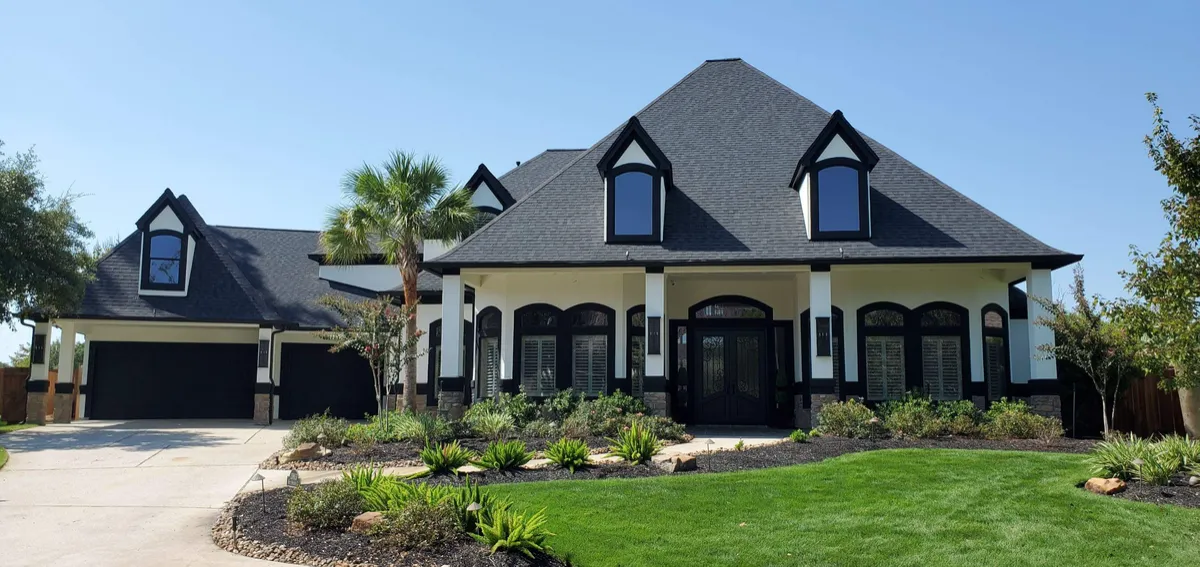
Post-Summer Exterior Paint Damage Checklist for Cypress TX Homes
What This Checklist Covers
After a Cypress, TX summer, check your home's exterior for six specific things: chalky fading (especially on south and west walls), cracking or peeling paint film, gaps or dried-out caulk around trim and windows, blistering or bubbling paint, mildew staining on north and east-facing walls, and hairline cracks where different materials meet. If you see two or more of these, especially peeling or blistering, the coating is failing rather than just aging normally.
I've walked hundreds of Cypress, TX homes in September and October doing exactly this kind of inspection. The pattern is almost always the same — it's not one bad thing that happens, it's four months of heat, humidity, and UV stacking damage in the same spots year after year until the paint finally gives out.
What a Cypress Summer Does to Exterior Paint
Humidity here runs 75-80% or higher for most of the summer. Combine that with a UV index that regularly hits 10 or higher from May through September, and you get a paint film that cooks during the day and absorbs moisture at night. That daily expansion-and-contraction cycle is what breaks the bond between paint and substrate over time.
Hurricane season adds another layer. Even in years without a direct hit, wind-driven rain and sustained moisture between June and November find every gap in caulk and every hairline crack in trim, pushing water behind the paint film. That's part of why blistering and peeling tend to surface more in October than in July — the damage accumulates all summer, but it doesn't show until the substrate is saturated enough.
South- and west-facing walls take the worst UV exposure and typically fade and chalk first. North- and east-facing walls, especially anything shaded by trees or backed up to a greenbelt — common in Bridgeland and along the trail systems in Towne Lake — hold moisture longer and tend to show mildew staining first instead.
The Checklist: Six Things to Look For
Chalky, faded color — Run a hand across the siding. Powdery residue on your fingers means the paint's binder is breaking down from UV exposure. Some fading is normal after a few years; heavy chalking paired with rough texture means the coating is past its useful life on that wall.
Cracking or alligatoring — Fine cracks in a web pattern mean the paint film has lost flexibility. Shows up most on trim, fascia boards, and older wood siding after several summer expansion cycles.
Caulk gaps and separated joints — Check where trim meets siding, around window frames, and at corner boards. Shrunk, cracked, or pulled-away caulk leaves an open path for hurricane-season rain to get behind the paint.
Blistering or bubbling — Press a fingernail gently into any bubble. Soft paint or easy lifting means moisture is trapped underneath, either from a summer application over a damp surface originally or from water intrusion through a caulk gap.
Mildew staining — Dark speckled patches on shaded or north-facing walls are mildew feeding on trapped humidity. It can often be cleaned, but mildew that keeps returning in the same spot usually points to trapped moisture worth checking.
Peeling at edges and corners — The most advanced stage of failure, where paint has fully separated from the substrate. Exposed wood underneath needs attention quickly, since Cypress humidity starts rot and pest problems fast once bare wood is exposed.
Normal Wear, Real Repair, and What It Runs
Even, gradual fading on a wall painted 6-8 years ago is normal aging. What separates normal wear from a real problem is unevenness — chalking on one wall but not others, peeling concentrated around specific windows, or blistering that keeps returning in the same spot after cleaning. Those patterns usually trace back to a specific cause: a caulk failure, an old paint job that skipped proper primer, or a moisture source like a gutter that's been dumping water on one section of wall for years.
Our exterior paint prep guide for Cypress homes covers how surface condition gets diagnosed before a job is quoted, if you're trying to sort out whether what you're seeing needs a targeted repair or a full repaint.
At Fresh Coat Painters of Cypress, spot repairs — recaulking, priming and touching up isolated peeling or blistered areas — typically run a few hundred dollars depending on affected surface area. A full exterior repaint for a typical two-story Cypress, TX home generally falls in the $4,500-$8,500 range with premium Sherwin-Williams products, though larger homes or homes needing significant wood repair first can run higher. These are our typical quoted ranges for licensed, insured work with dedicated, background-checked crews and premium coatings, not a national estimate — every home gets a walk-around before a number goes on paper.
Fall and spring bring the mildest curing conditions, but painting happens year-round in Cypress, TX with coatings formulated to cure across a wide temperature range. Peeling paint or exposed wood doesn't need to wait for a particular season — moisture continues working on bare substrate for as long as it's left uncovered.
Credentials That Matter Here
I've been painting homes across Houston and Cypress, TX for over 20 years, I'm Sherwin-Williams Platinum Certified, and I'm a member of the Painting Contractors Association, which holds me to a set of industry standards beyond what's legally required. Fresh Coat Painters of Cypress is fully licensed and insured, and every exterior job comes with a 3-year workmanship warranty — after that, Sherwin-Williams backs the coating itself for the life of the project because of our Platinum Certification and the product lines we use.
Frequently Asked Questions
How do I know if my paint failure is UV damage or moisture damage?
UV damage typically shows up as fading and chalking, concentrated on south- and west-facing walls that get the most direct sun. Moisture damage shows up as blistering, peeling, or mildew staining, usually near caulk gaps, damaged trim, or shaded north-facing walls. Many homes in Cypress, TX show both, since a wall can fade from sun exposure while a nearby joint fails from trapped humidity.
Is chalking on my siding a sign I need to repaint immediately?
Not necessarily. Light chalking is a normal sign of an aging paint film and doesn't mean the coating has failed structurally. Heavy chalking combined with rough texture, uneven color, or cracking is a stronger signal that the coating has broken down and needs attention.
How often should I repaint my house exterior in Cypress, TX?
Most homes in this area need a full repaint every 5-8 years, though it varies by siding material — wood siding often needs attention closer to the 4-6 year mark, while cement fiberboard and brick can go longer. Houston-area humidity and UV exposure tend to shorten these intervals compared to drier climates.
Can I just clean mildew off instead of repainting?
Yes, if the paint film underneath is still sound. A proper wash removes surface mildew without needing new paint. If mildew keeps returning in the same spot season after season, that usually points to a moisture source that needs addressing before repainting that section makes sense.
Why does damage show up worse in fall than it did during summer?
Summer's heat and UV do the initial damage to the paint film, but hurricane-season moisture from June through November is what finishes the job by pushing water into cracks and gaps that formed earlier in the year. That's why homeowners often notice blistering or peeling more in September and October than they did in July.
Does a two-story home cost significantly more to repaint than a one-story?
Yes — height adds both labor time and equipment requirements, and two-story homes generally run toward the higher end of our typical exterior pricing range. Roofline complexity and the amount of trim also factor in more than square footage alone.
What's the best time of year to paint an exterior in Cypress?
Fall and spring offer the most ideal drying conditions with lower humidity and mild temperatures, but that doesn't make summer or winter unworkable. We paint exteriors in Cypress, TX year-round using coatings formulated to cure properly across a range of temperatures.
Do older homes in Fairfield need different prep than newer homes in Bridgeland?
Often, yes. Established neighborhoods like Fairfield tend to have more original wood trim and older caulk lines that need closer inspection and repair before painting, while newer construction in Bridgeland or Towne Lake with cement fiberboard siding usually needs less substrate repair and more attention to caulk joints around windows and corners.
What should I do if I find peeling paint with exposed wood underneath?
Address it as soon as reasonably possible rather than waiting for a specific season. Exposed wood in Cypress's humidity is vulnerable to rot and pest damage quickly, and the longer it's left uncovered, the more repair work it typically requires before repainting.
Get an Honest Look at What Your Home Actually Needs
If you walked your own exterior after reading this and found a few of these signs, the next step is a straightforward in-person assessment of what's failing and what's still sound. You can reach Fresh Coat Painters of Cypress at https://freshcoatpainters.com/locations/cypress/ to schedule one for your home in 77429, 77433, or anywhere else around Cypress, TX.
— Joe Martinta, Owner, Fresh Coat Painters of Cypress